[./index.html]
[./biography.html]
[./works.html]
[./storecds.html]
[./txt.html]
[./gallery.html]
[./press.html]
[./video.html]
[./poetry.html]
[./denk.html]
[./news.html]
[http://www.myspace.com/patrickdorobisz]
[./archives.html]
[./contact.html]
[./links.html]
[./bookingpress.html]
[Web Creator] [LMSOFT]
patrick
dorobisz
Store MP3
TxT
Ostende
Patrick Dorobisz-Kondrackas was born on the 25th of May 1955 in France to a Polish father and a Lithuanian mother.  Of Polish nationality, he was naturalised French at the age of 13.
He studied music, drawing and painting from an early age. While studying at the Academy of Fine Arts, after having studied and obtained a diploma in architecture, he started his first repetitive electro-acoustic music compositions and produced sound installations.

In 1976 he successfully obtained his National Diploma in Fine Arts. This artistic education would always be the main theme that comes through in his music. His first definitive piece was “John’s collage 1973”, collages of magnetic tapes for the progressive rock group in which he played.
This musical experiment was played out on several tape players which were deliberately unsynchronised. The same year, he wrote “Gretsch pattern”, a piece for electric guitar, followed by the “Electro” series of pieces.
His pieces were created in France and Germany between 1975 and 1980, and in Belgium in Ghent (Institute for Psychoacoustics and Electronic Music-IPEM).
Composer Lucien Goethals, the director of the IPEM, invited him there from 1984 to 1987.  He went on to win the International Electro-acoustic Award at Bourges festival (1986) with his piece "Souprematika", created in the Institute’s studio.
Other creations also took place - "Alice de l'autre côté du miroir" at Lille opera house (1987), "Autres directions" at the Seoul Computer Music festival (1987), The sound of Israel in Berlin, "Geometria"  at the International Music Conference in Ann Arbor, Michigan, USA (1998) "3+11" in Santa Fe, and also at the Auditorium in Lille in France (2003- 2006).
In the 70s, Patrick Dorobisz composed his music using the analog devices of the time, the first synthesizers and tape recorders.

He started using computers in 1983, then in the 90s came the physical modelling of acoustic sounds. It was during these years that he went on to compose several mixed pieces for orchestras or solo instrumentalists.

His work is multiple, protean, plastic and conceptual, from his first electronic experiments to his string quartets, and never leaves the listener indifferent.

Patrick Dorobisz has created a musical language for himself, which draws from pictorial composition, and he invites us to discover imaginary sound spaces which are different every time, universes where the musical architecture derives above all from pictorial research.
He gives us another vision of contemporary music, with the approach of a painter, architect and artist-composer.
Patrick Dorobisz lives in Belgium in the province of West Flanders, where he continues his musical research. 
  
Biography in brief
You listen " L'orpheon de Jade " First creation
IPEM - Gent - Belgium - 1985 -  CD : musique au bord du temps et du silence

Second version Live with the computer music ensemble -
Lille' auditorium (France) 2003.  Cd : Le marteau double

Available in the MP3 store or CD Store


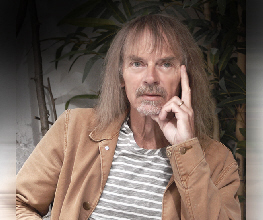
Patrick Dorobisz - foto M.Wozniak © 2009
analog 70's - writing (1975) - mixing console - radio (1982) - José Berghmans Lucien Goethals (1985) - Performance - Computer 1983
The son of Polish and Lithuanian immigrants, Patrick Dorobisz was given artistic education as a young child and in 1972 he started to envisage an artistic career.
He made his first experimental works in 1973 as a student in the Fine Arts school of Valenciennes, then Cambrai. Cambrai's school had quickly emerged as the best choice, as it admitted artistic, pictorial, musical or other experiences, in the contrary to the Conservatoire where neither electronic musical teaching nor sound work-shop was proposed. Art still had a flavour of freedom and ideas from the " Fluxus " avant- garde movement, as well as rock, pop art and other aesthetic trends were represented Refusing to position himself in the classical music field or in the plastic arts of the 70's, P. Dorobisz used the technologies of the time to develop his own artistic processes: the electronic medium sound seems to him the most adequate mean to fulfil his aspirations. He quickly perfected his musical knowledge, studied new forms of music and developed the electro-acoustic extreme of the rock and free-jazz band in which he was playing, Jon's/Omintone (1972). At the time, the band was playing all around France and appeared in " switched-on " festivals and clubs, such as the Gibus Club and the Golf Drout in Paris. P. Dorobisz was famous for the electrical " bursting out " he could produce on stage, by using instruments such as organ, mellotron, saturated guitars, saxophone, flute or percussions. He worked on the band's tapes, edited them in small sound sections, made collages, changed the original content and added larsen effects live on stage with percussions and electronic sounds. In 1974 he gave up this editing technique and used frequency generators and several tape recorders. As he did not want to reproduce the Free Jazz schemes he had played, he asked himself how to write electronic music and how to represent electronic sounds. Finding information was not easy at the time
Did he have to write frequencies? Describe all sound components or select only some of them?. He answered all those questions by developing a personnel graphic language. He drew his electronic sounds and only kept the basic features of a sound material to represent it. With no eight-track tape-recorder at the beginning, he had to get by as best he could. The use of several tape recorders, yet synchronised, proved risky... Technical dephasing quickly became a parameter with which he wrote. He used large sheets of paper ( 50/65 cm) to write his music, but the necessity to place several sheets side by side to write down the time process created difficulties on a graphic level. Music goes from A to B, the global space of the sheet is not used. To fill the emptiness of the sheet, he thought about sound physical spatialisation.
These large sheets where the music is written and drawn, became partitions-tables made on canvas and papers of different textures or materials that are left to deteriorate with time. According to the graphic degradations obtained, he modified the original composure and changed the sound texture, parameters, etc. He then reduced the formats that were still written in the plastic linearity to a format of immediate visual globality, so as to obtain a total perception of the written musical work. Time is excluded of the partition, as it is impossible to respect due to technical dephasing. The work, its listening/composition is submitted to the engines and cabestans of each tape-recorder. This concept of listening/composition due to technology and graphic representation will be developed by superposing an increasing number of sequence fragments. It produces a music where textures and rhythms are always composed with a time- lag with a different thickness every time. P. Dorobisz accumulated tape-recorder sequences, somehow in the same way as his friends, the materialist painters, experimented all possible accumulations. Some sequency fragments are proposed as tapes and left to the listener who has full freedom to determine the musical work and a new sound globality. As for the metrical time process of the partition, it is lost in the unique recognition of electronic sounds graphically coded and plastically treated. The meaning loss of what is written brought Dorobisz to further develop the dephasing between what is seen and what is heard: For a given music work, he gives a name or presents partitions which are not relevant. Only drawn sound materials belonging to his graphic language can be identified. Twenty-five years later, he will keep saying to the musicians playing with him: " If you want to play a Do instead of the Mi, which is actually written, do it... It is still a note, no matter if this Do is played now or later, this height and its interrelations in musical language are relative. It remains submitted to the subjectivity of a music codification system and of its aesthetics. The main thing is to have a sound first of all. " With the help of Claude Cathelain, a photography and technology teacher, but also an inventor and electronician, P. Dorobisz turned
an electronic keyboard into a 32nd of key. He worked on the micro--tonality of his cythara and resolved the problem he used to face as a child with the Do and Do# of the piano: " What universe could exist between those two notes? Why had Mozart and Beethoven not explored that universe? " When he realised that his musical theory teacher was teaching him a system and rules on which all the " great "music was based, he found he knew enough about those twelve notes, chords and musical dictations. He went back to his cythara, his elder brother's electrical guitar that fascinated him and that strange amplifier. Curious about everything but impervious to any dogma or compositional system, in music as in painting. For exemple about the 12 tones, His reaction will be to set 32 sounds from his micro-tonal keyboard in a loop on a first tape recorder, use the reversal on a second tape-recorder and let those sequences dephase themselves. In 1974 he presented all those musical experiments in public on the occasion of an end of term concert in the Fine Arts school and in 1976 he presented his paintings on magnetic tapes, his partitions and writings to the members of the jury. His initiative will make him obtain the national diploma of Fine Arts. On the same year, he studied the sitar, the rabab and experimented meditative music works with a minimum language. In 1978 he became weary of the system that has imposed itself upon him and decided to impede dephased polyrhythmy. His experiences of meditative music influenced that choice. During a collective exhibition, he presented one frequency, a form of continuous wave. This wave was seen as a " musical sample " put into motion and its title " Point musical mis en mouvement " reminded of " Point ligne plan " from W. Kandinsky. This frequency is played in an environment of tables/partitions where rhythmic graphic writing dominates. On reading those tables- partitions, the audience can envisage to be the main actor/composer and discover an inner music. The concept of participation to the musical work, movement and speed of the musical entity joins the apparent steadiness of meditative music. Music is then seen from the angle of the awareness of sound, being and awareness of the world. As for the statute of the musical work seen from the angle of writing techniques, dominating aesthetics or musicology analysis, P.Dorobisz turned away from it. In 1979, he diverted a repetitive musical work and restructured it into centimetres of magnetic tape without bothering about the musical content he had composed. The need to make a clean sweep, the constant challenging of his work, the concept of its reversibility and even the statute of the work of art in our industrialised societies were to be his main concerns.
During all those years, despite the major work carried out in the musical field, he did not position himself in the world of musical creation or in the world of composers. To him, the latter's' aesthetic concerns belonged to the last century, compared to the new ideas and concepts that were coming every day from painters.
In 1981, P. Dorobisz created a happening in Lille's pedestrian area, mobilised a radio station and organised a big game: Painted sheets had been spread out on the ground and he offered a cassoulet can for every correct answer concerning arts and their function. One year later, he presented an orchestra of loud speakers in " Place Rihour " in Lille where he played both repetitive and meditative music works as well as raw natural sounds coming from the country, the sea-side or sounds from the town. He wanted to draw attention to environmental problems in urban areas. As computer music technology appeared on the market, he used the first music computer CX5m (1984) then up-dated versions. He developed his music by using the MIDI system. For the second time, technology was to show him new writing opportunities. He studied the dephasing concept again and composed several works of repetitive music. The interval with semiquaver (sixteenth note), demisemiquaver (thirty-second note), hemidemisemiquaver (sixty-fourth note) were made with absolute precision. The concept of a purely " machine-made " music, which could be infinitely duplicated, allowed him to envisage a liberation of the composer from all traditional obligations: It meant the possibility to have your music played without the help of musicians or a conductor. He exclusively composed for computers, experimented synthesis sounds, " samples ", new orchestral textures. Then, with precision thanks to the MIDI system, he developed all micro-tonal possibilities and synthesis work by frequency modulation, which had been up to then experimented with ring modulators. The " sound abstraction " stemming from those new technologies and the computer management of sound parameters placed him in the pictorial field again turning around geometry.
P. Dorobisz sees a parallel between the free navigation of surfaces/plans of the painter K. Malévitch and the sound materials from the computer FM synthesis. He studied Malevitch to the point of remaking paintings according to suprematism composition principles. The only end is to find a new approach to music. He extrapolated and transposed Malevitch theory: autonomous surfaces/plans of suprematism have their parallel in the composition of autonomous sound blocks that are totally independent but which can be set side by side according to their sound permeability so as to create a music work. Those sound blocks are made up from a random series of x notes, set in a loop from an original material determined by a type of envelope and through an important work on parameters so as to melt the sound content into the series, which in turn has to disappear in the heights. Sound blocks are seen as " sound entities " that cannot develop within a musical discourse as they are submitted to continuous repetition. It is the loop effect that develops and makes the sound material. Repetition is here the source element and participates to the structure of the work. The work is no longer composed from A to B, nor on a harmonic level, but as a suprematist pictorial work. The work is composed as if it was a space or an original plan to be structured.
In 1984, Patrick Dorobisz met José Berghmans who invited him to the IPEM of Gent. Lucien Goëthals, a composer and the Institute director offered him to work in the studios. P. Dorobisz made several works and in 1986 he obtained an international award in Bourges electroacoustic music festival for his work " Souprematika ". But the manifesto work of that geometrical abstraction is " Geometria ", composed in 1989. P. Dorobisz applied some of those composition processes for several mixed instrumental works (Autres directions - Narvik - Percussions pour piano midi, etc.) In 1990 he started a new instrumental period characterised by the use of ethnic instruments (3 +11), computers and cord instruments. Since 1995, he has been working on physical modelisation of acoustic sounds. He created the " Computer Music Ensemble ", an associative structure which brings together the string quartet Arsis, invited instrumentalists and the musical computer music studio. For 30 years now, Patrick Dorobisz has been working on music with continuous experiments. He has introduced us to a new way of approaching and seeing music.
Minimalist music and computer music, Experimental Music, New contemporary music
Biography complete
Patrick Dorobisz - Computer music, Experimental Music, Minimalist music, New contemporary music